Starting a business in the city of the Beatles and the Liver Birds is an exciting move. Liverpool’s entrepreneurial scene is booming, especially in the Baltic Triangle and around the Port of Liverpool.
This guide will walk you through launching your Shopify store with a specific focus on the local Merseyside landscape.
Step 1: Define Your Niche & “Scouse” Identity
Before touching the software, you need a plan. Are you selling handmade jewelry inspired by the Mersey, or high-end streetwear for a night out in the Metquarter?
- Identify Your Market: Use Google Trends to see what Liverpool residents are searching for.
- The “Support Local” Factor: Liverpool has a fierce sense of community. Highlighting that you are a “Liverpool-based business” in your branding can significantly boost your initial trust levels.
Step 2: Legalities & Registration (UK & Local)
You can’t trade legally without a proper setup.
- Choose a Structure: Most start as a Sole Trader (simple to set up via HMRC) or a Limited Company (registered with Companies House).
- Local Support: Check out Liverpool City Council’s Business Support Service or the Growth Platform (Liverpool City Region). They often offer free advice and sometimes grants (like the “Test My Business Idea” grant from The King’s Trust for those aged 18–30).
- Registered Address: If you’re running the business from your flat in the city centre but want a professional look, consider a “virtual office” address in the Baltic Triangle.
Step 3: Setting Up Your Shopify Account
Go to Shopify.co.uk and start your trial.
- Store Name: Ensure it’s catchy and the
.co.ukor.comdomain is available. - Currency: Set your store currency to GBP (£).
- Tax: Shopify usually automates UK VAT settings, but remember: you only must register for VAT if your turnover exceeds £90,000 (as of 2026).
Step 4: Design with a Liverpool Flair
Your theme is your storefront.
- Theme Selection: For fashion, try “Dawn” (Free) or “Empire” (Paid).
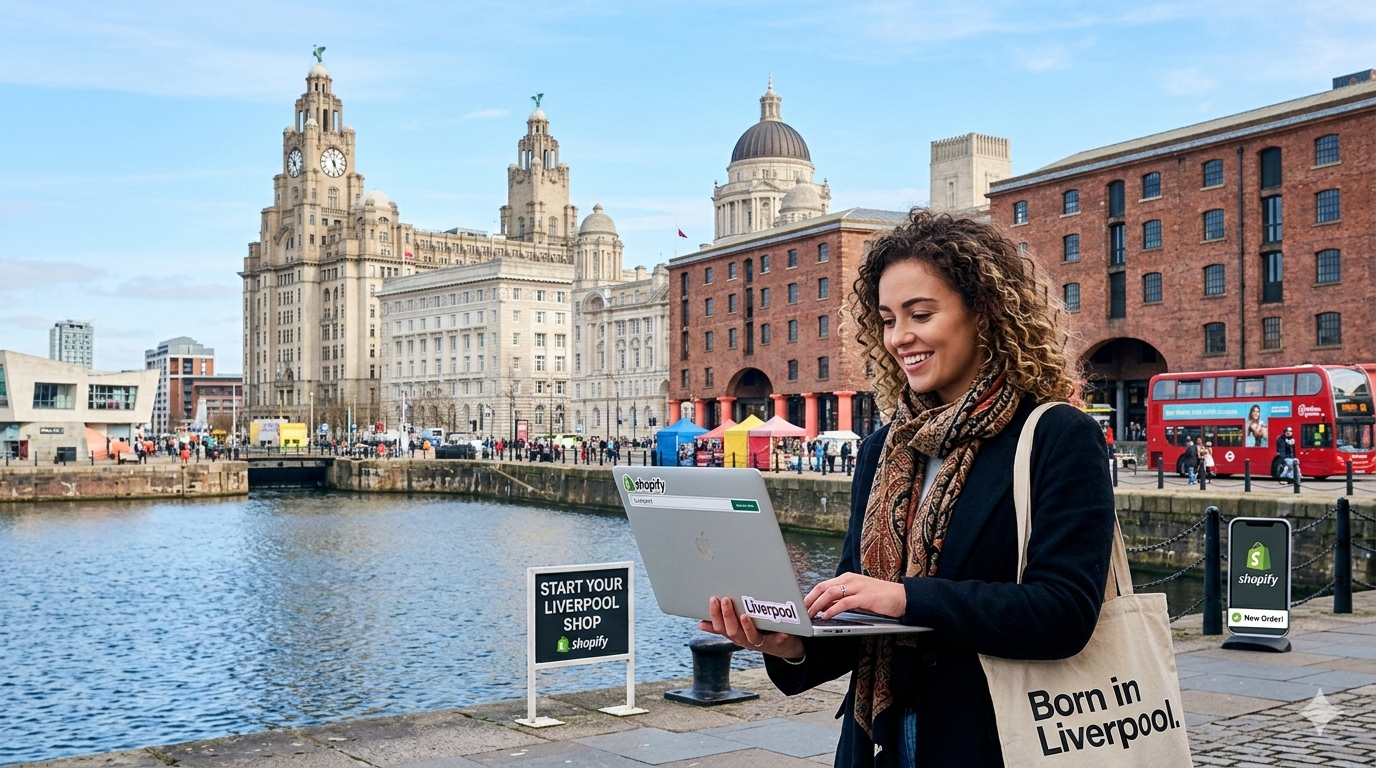
- Photography: Don’t use stock photos. Hire a local photographer to take product shots at iconic spots like the Albert Dock or the Georgian Quarter to give your brand an authentic Liverpool “vibe.”
Step 5: Sourcing & Logistics (The Port Advantage)
Liverpool is a port city, which is a massive win for e-commerce.
- Sourcing: If you’re importing, the Port of Liverpool (Peel Ports) is on your doorstep.
- Shipping: For local Merseyside deliveries, consider apps like Zapiet for “Click and Collect” points in the city.
- Couriers: Use Royal Mail (the Copperas Hill hub is a local staple) or 3PL providers like Kays Logistics (Speke) or TWA Warehousing (near the port) if you’re scaling fast.
Step 6: Payment Gateways
Scousers expect seamless checkouts.
- Shopify Payments: This is the easiest way to accept credit cards and Apple Pay/Google Pay.
- Buy Now, Pay Later: Integrating Klarna or Clearpay is highly recommended for Liverpool fashion and beauty brands, as these are very popular in the local demographic.
Step 7: Local SEO & Marketing
How do you get found?
- Local SEO: Include keywords like “Handmade in Liverpool” or “Best boutique in Merseyside” in your meta descriptions.
- Social Media: Liverpool is a highly social city. Use Instagram and TikTok to tag local landmarks. Partner with local influencers—Merseyside has a massive network of fashion and lifestyle creators.
- Physical Presence: Consider a weekend stall at the Baltic Market or Maker’s Market to drive traffic to your Shopify site via QR codes.